Thursday, 11 April 2013

Not quite there yet

People who make films are supposed to like David Cronenberg, so it should come as no surprise that I praise him.  Having done a hard day's editing, I turned on the television to escape from films for an hour or two, and when Channel 4 suggested I watch "History of Violence" I have to say I wasn't keen.  But what a film!  It is moving, vicious, funny, harrowing, sensitive and so so beautiful that I was captivated before the first cut.  I mean, HOW does he do that?! I guess the answer to that lies somewhere in the 35 industry awards that the film gathered, but I know it got me going before he'd even put a pair of scissors to the thing.
 
If you could only see the workings under all this
I suppose that demonstrates the power of a good establishing shot.  Today has been spent, appropriately, on finalising my own establishing shot. It has been a big effort, three interacting layers; two of animation and one motion  background and it all took a surprising amount of time. Remember, I've already shot everything here!

  It's actually a pretty satisfactory result to my eye and not far off the original storyboard but it left me wondering if it wouldn't be better just to build bigger sets in future and get it all in one take.

For the rest of it, the film exists as a rough cut right now, rendered at 9pm today  - I guess that makes the deadline in a manner of speaking.  All the time, I'm learning new things about the process. I have assembled and disassembled shots so often and I've filed frames into so many different folders that the chapter I wrote on data wrangling six months ago is starting to sound naive and blindly optimistic. 

The management of data is such a crucial thing on a project even this small.  It's all very well your frame-grabber knowing where it saved the raw file for frame no 172 of that sequence you did last May where the woman turns and smiles, but if you need to get into that file yourself to rub out a bit of rigging or a fragment of registration mark using some other software, it could take you so long searching through stack after stack of "dot ORFs" that when you find it you've totally forgotten what you wanted it for.

"Poppylands" exposure charts:  now mercifully redundant
All the time you're editing and manipulating frames you're trying to keep the quality and resolution as high as you can - so much will be lost to compressors downstream that it will make you cry!  I had a moment of concern when I watched an assembly and two of the shots appeared to be out of focus.  This was because I'd accidentally asked for Mpeg quality in an early generation long before I imported the clips into the editor.

One day there will be a full featured stop motion management package that will take care of everything for me in all circumstances, but I haven't found it yet.  (Things are getting better - I once had to write a very complicated spreadsheet to keep track of a production)  However,  I'm still depending on eight - yes eight - separate software packages for this post production, so it's vigilance, diligence and an anally-retentive attention to detail for me for now.

Monday, 25 March 2013

Deadlines looming

It's hard to believe it'll ever be finished!
I heard Henry Selick say once that you can't start a stop motion project with the sole aim of getting to the end of it and he's right. You have to enjoy the process or else lose your mind!

However there is an undeniable feeling of satisfaction when the animation comes to an end and you know you have those ephemeral, slippery performances locked down on a collection of frames; a mere 3055 individual images in this case.


It's a good time just now, a lot of projects are concluding for me.  These last few takes, for example, have been held up by a naive attempt of mine at directing live action.  Boy, that's hard!  I don't know where people find the patience. So that went up last week freeing up several hours for what I've always affectionately (anachronistically) called the Firebird Production Schedule.  A fabulous work of fiction!

I've set myself the arbitrary deadline of 10th April to complete the film.  I'm not necessarily going to make it any more than all those other deadlines I've set myself in the past, but I have got an inclination towards screening dates, the first of which may be towards the end of April so....

Calling the final slate last night, I felt the same kind of satisfaction as when the fabrication was complete, the sets were ready and the filming could start. Only a year ago, I remember getting very frustrated that, much as I loved building and painting the scenery, sewing (Yes, sewing! Me!) the costumes and styling hair and make up on the puppets, I hadn't fired the shutter once in three months!

Looping ADR is the really fun part!
Now, like then, a new process begins; this time I can start erasing rigs, painting in backgrounds and compositing.  I finally get to loop additional dialogue and foley and compose and record the music. I've said before that I enjoy not knowing for sure that it's going to work.  But you have to be committed to whatever you think it can become so that as you watch it slowly develop you get that warm paternal feeling of nurturing a creation into life.  Frankenstein, eat your heart out!  If - and it inevitably does evolve into a completely different animal to the one you expected, the fact that you have the ability to let that happen makes you feel like a much better person.

...It might give the financiers an ulcer but, really, isn't that going to happen anyway?


Monday, 11 February 2013

Flies like a bird

The bird was the first puppet I cast for this film.  I'd never done a bird before and I honestly can't remember whether the story spread from my desire to fly a bird or whether it was purely coincidental.

I've shot a couple of slates with the bird this week and I have to admit there's a certain freedom in  anthropomorphising a flying animal.  I've spent so much of the last year idly watching birds in preparation for the role.  It's quite a complex and beautiful act, flying.  You can see why the ancient artists and inventors were so desperate to get themselves wings made of feathers.

An aeroplane is a lovely instrument and perhaps living ten years next to a busy airport has left me complacent about the spectacle of those giant metal creatures taking to the air but the majestic grace of a large bird flying is something much more inspirational.  Even the humble pigeon is a more sophisticated flier than the cleverest airbus. Watch that one dart across the square hardly moving  a wing then gently alighting in the space between those two metal spikes by the CCTV camera.

Richard Bach wrote Jonathan Livingston Seagull to express the idea of intellectual and spiritual freedom.   A Seagull was the perfect bird to describe this, if you've ever watched them ducking and wheeling across the sky,  the speed of their diving for morsels describes a great skill underlying their airborne squabbles for old chips.  You can see in it the single minded ambition of a scavenger bird.    Our contemporary urban existence is, in fact, not dissimilar to the lives lived by pigeons, gulls and other municipal nuisances.


Runners gather at the telephone post
Pigeons, for example, live huddled together in communities near transport links and food outlets, ignoring hierarchy when they choose.  They indulge in and are the victims of petty crime and muggings.  Their youngsters can be particularly antisocial.

Pigeons fly around the park
I saw a gang of adolescent pigeons on Staines High Street last year deliberately buzzing passers by, forcing them to dive out of the way.  The pigeons gained nothing from it and they totally seemed to be doing it for a laugh. A kind of Avian Happy-Slapping.

Pigeons gather in groups on the shed roof at the end of the park and on the signal of a leader they all set off as a single body on a circular flight around the park to land on the same roof. I've seen joggers and rollerbladers doing much the same thing.  It's sport.  We've achieved Michelangelo's dream of living the lives of birds.

Where was I going with this?

Monday, 4 February 2013

Wind Reel and Print

That's what I said.  It's a WRAP.  And after only a year, that's got to be a record!  Actually you can relax, you're nowhere closer to seeing the finished product, this is the end of block ONE and that just means that all the human activity and dialogue is shot.  It is also, as the title suggests; processed, printed, synched and chucked into AVID for a rough cut.

I've been answering a lot of questions about the film recently, I'm even negotiating a first screening date, I feel like a proper little producer this month! It's possible the film's title will change to better reflect the direction which will totally mess up this blog.

So I'm getting used to the ideas behind the film again: what it is that I'm trying to say.  I imagine I'll have to find ways to describe it to people.  It's a very simple story.  After all, it's three minutes long and there's only so much that you can say in that time.

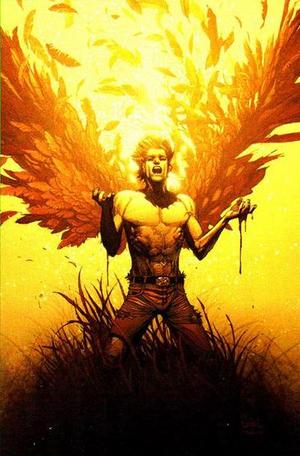
Firebird basically describes the moment of turnaround between spiraling despair and hope.  It's coming up on the year since I started working on this and that is not lost on me. Of course it's been a terrible season (In case you came in late, I'll again mention that winter is not for me) but I've got through it by ignoring and hoping it will go away - that seems to be working.  See? It's February already! In any case I now have the advantage of lucidity and precious distance to critically view my own behavior and decisions in that other time when things were at their worst.  I needn't bore you with the details but while it would be unfair to say that those situations were not bad, my instinctive reactions to them did not help me and they certainly hurt others.
 
Bad Hair Day
That's the state the central character is in, absorbed in fighting for her own sense of existence, she has ignored how important that existence is to the other people in her life.  The Firebird forces her to look outside of herself.

Block TWO, meanwhile, is well underway.  All the stuff that the bird actually does. It's about six shots and it plays the counterpoint narrative. No dialogue does make it shoot faster.  I have to say, latex and wire are not the most dextrous of materials for lip movement, but they have a tenacity and have given me some pleasant surprises.

It's down to the rigging of the face, right?  I've learned some valuable - and expensive - lessons about puppet fabrication.  Latex skin is surprisingly tough and takes a lot of pushing to get the wire supporting it to move. When it does move, the most interesting things happen.  Unlike clay which lets you move bits independently, stick bits on and shave bits off, latex just tugs frantically at other areas of the face - eye lids, nostrils etc, really anywhere that there is space to give. The resulting expressions are more diverse and imaginative than I could ever control.  These little characters really do take on a life of their own and that's why they've taken quite as long to animate as they have. 

Animating hair is a story all it's own.

Wednesday, 5 December 2012

Closing In

I'm shooting close-ups just now.  They are my favourite bits because these are the shots that tell the audience what the character is thinking and feeling.  Arguably the most critical parts of a film.  There's also less for the audience to look at so accuracy in things like lip sync and eye movements are important to convey meaning.  Absolutely vital is the registration of the puppet's position on the screen so she doesn't jump around and become painful to watch.  On a small stage like this (Roughly 1/8th scale) a movement of less than a millimetre is simply HUGE in a close up.

I've said before that animation is like acting through puppets and that is never more true than in the close shot.  I find therefore that it helps to have the camera close to the puppet when I'm taking them.

Now what is Tom Hardy thinking?
The same is true of live action, by the way.  Every actor, no matter how engrossed in the pretense of the role; knows where his audience is and when he is performing for a close up, the size of his action (Oi, behave!) changes from when he is playing in a long or medium shot.

It's only human nature: his audience is up close in front of him so, psychologically, he doesn't feel like he has to project his acting to the back stalls but can express a complex thought with a tiny twitch of his eyelid.

Just so in animation, with the camera so close that it almost gets in the way of your working,  you are constantly aware that the performance of subtle movements in the eyes or of a swaying strand of hair needs only to travel a couple of inches to it's audience, so you instinctively make those micro-millimetre changes necessary from frame to frame.


Then there's the walk cycles. One still to go on that front, damn, but they're hard to do!  This recent slate with the character walking reverently from background to foreground used up all of the rigging tools that I had, switching between screw-downs from under the stage - only necessary while his feet are in view, then moving on to a clamp attached to the rigging point on the puppet's pelvis and when the boom arm from that could no longer be hidden by his robe, a vertical pole and spreader and finally my personal favourite, the "bobbing up and down on a stick" device as he comes into focus.

Something that didn't occur to me until this is that all that rigging, though invisible to the camera, casts shadows on the set.  Shadows that you don't notice until they mysteriously disappear as you change the rig type.  Just to the left of frame is a collection of black flags creating replacement shadows where the big black rigging boom used to be.  It's been a trial but it's come out a lovely shot.  It's too near the end of the film to show it to you in full here so, no.

Thursday, 8 November 2012

Going Again

I am on a journey.  A noble and valiant quest, risking all that is precious to answer one of the greatest questions of our age.

WHAT IS A GEEK?

i am a geek

The Geek Test offers some criteria
If I had a pound for every time the answer to that has been "You are" I would have much more time to spend with my family.  But I have never really been given any explanation of what it truly means to be a geek.  I enjoy science fiction, own a computer and have a strong aversion to sports, but that goes for a lot of people.


Of course if Jon Ronson is right and the world is run by psycopaths the role of the Geek must be critical to their success.  The heads of Microsoft and Apple must have some appreciation of this.  (Am I the only person left who doesn't own an iPad by the way?)  Because the best - and kindest - definition has to be from DJ Blu Peter "Someone who pays attention to the minutia of life"

A details man in other words.

My current detail is the reconstruction of the great animation stage in the new house. I'd run out, anyway, of all those little jobs that need doing in a new home: patching up the dodgy wiring in the living room, descaling the waterworks, finding that sweetspot on the thermostat that's right between sahara and baltic and properly colonising the shed.  It's called the Gillespie Stage by the way, in the manner of the Richard Attenborough Stage or the 007 Stage at Pinewood.  It has been a lesson in getting on with it and finishing the damned project before I move in future.

Finally, it fits!
Actually one of the first and most precious boxes to be transported was the one containing the very carefully packed polystyrene and plaster rock face.  Precious because everything else in my life: the equipment, clothes, crap and books can all be replaced more or less like for like. This set, on the other hand, is a completely unique object, the destruction of which would render eight months of work on the project utterly worthless (that's including the footage already shot)

Chaos behind the scenes
So the rebuild has given me a very thorough appreciation for set designers who work in touring theatre. The various modules of the set were organised so that the cracks between them were disguised by natural crevices and overhangs.

Thought I was being clever, didn't I?  Unfortunately - and I cannot explain why - the surface of the stage floor appears not to be as completely flat as the one on which I built the set, despite being one and the same.  The gaps took some man-handling out of existence in spite of the small scale of the thing, there are some holes I can't seem to shift.  I shall just have to be cunning with the photography and, unlike the first take on the new stage; I shall have to pay very close attention.

Specifically, I shall have to not start shooting with a principle character's eyebrows mysteriously absent.

So much for details....

Tuesday, 4 September 2012

Wrangling Data

I took some time to make prints this week.  Working with a DSLR is a surprising return to the practices used on film stocks.  The camera takes very high resolution pictures that are not practical to work with on anything that isn't a government supercomputer.  The way I work is I capture video-assist from the camera's live output tap and then, once i'm happy with the shot and the sequence of movement, I unload the camera and develop the pictures.

I don't use any particularly fancy software.  I know SMP and DragonFrame are incredible tools and every day or two I wonder which one I should hitch up to but until I can pull the finger out I'm still using Monkeyjam which does the basic job rather well.

I shoot everything on twos i.e. each movement lasts for two frames - this works out as a peculiar 12.5 frames per second (FPS) in the European 'Pal' video standard of 25 FPS.

It sounds like a cop-out but the difference is barely noticable unless the animated movement is very quick.  Then I can switch to singles - one frame per move - for a half second or so and switch back.  You'll never see the change, and fewer frames means less hard work.  So that's what the computer does for me; keeps track of all my inconsistencies.

The camera meanwhile is recording each frame in 3675 lines... or some other indescribably big number, I can't remember.  This is RAW format which is the digital equivalent of a film negative.  Every percievable bit of light is recorded on the file so that if, on a whim,  I decide in post production to stage the scene at night, I can process the final video to look how I want.  (I'm not joking, I had to do this once and while it's basically impossible to do it with Standard Definition Video, shooting in RAW makes it rather easy)

Then comes the sequence assembly.  I go through the exposure sheets - generated by the computer at the shooting stage - this lists how long each picture holds on screen (usually either 1/25th or 2/25ths of a second - very occasionally 3/25ths, never more) and I line up the frame numbers with the dialogue soundtrack.  This takes ages.


The finished product is a strip of AVI video measuring 1080 by 1440 pixels which can be imported into any video editor (I use Avid because I'm an Avid fan - don't even get me started)  After that it's just like proper filmmaking. I'm nowhere near that stage on Firebird but now at least I have some video to play with.